India's mostwanted terrorist Dawood 's AIDE karimullah is arrested by Mumbai Crime Branch.
Dawoods AIDE Karimullah arrested by Crimebranch
Mubai police and Crime Branch says "Karimullah was wanted for hatching Terror Cause"
Karimullah confessed that Dawood is in karachi,Pakistan now.
Karimullah is ARRESTED in connection with the 1993 Bombblasts happened in Bombay.

Worlds 2nd largest in population-India.
billions of mobile users...
Who will take the market from the three
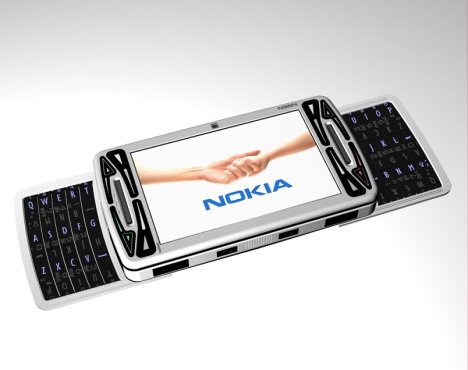

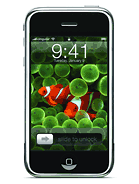
Today I got the news from our local newspaper.
I think it won't work because Iphone is not only a phone.
It has a stylish look its so sophasticated whereas Nokia is as it is.
Iphone cost in India will be around Rs.31,000.
So, N96 is going to be priced about Rs.30-35,000.
While Iphone will be available to us on 22nd august 2008.
and N96 will be available on 29th august.
Nokia has started advanced bookings for N96 now.
Whereas iphone lovers have ordered the mobile from the grey market.
-----------------------------------------------
Iphone specification
•Screen size: 3.5 inches
•Screen resolution: 320 by 480 at 160 ppi
•Input method: Multi-touch (touchscreen) and side buttons for volume control
•Operating system: Stripped down version of OS X
•Web browser: Safari
•Application and Widgets: Google Maps, Stock quotes and Weather information
•Storage: 4GB or 8GB
•Phone technology: Quad-band GSM(MHz: 850, 900, 1800, 1900) and EDGE (This means the phone is not a 3G phone but a 2.5G)
•Wireless data: Wi-Fi 802.11b/g Bluetooth 2.0
•Camera: 2.0 megapixels
•Battery: Up to 5 hours Talk / Video / Browsing, Up to 16 hours Audio playback
•Dimensions: 4.5 x 2.4 x 0.46 inches
•Weight: 4.8 ounces / 135 grams
-----------------
N96's specification
• Quadband EDGE
• Dualband HSDPA 850/2100 MHz
• DVB-H Class C
• 92 cc volume
• 125 gram weight
• 103 x 55 x 18 mm
• 16 GB internal memory AND a microSD(8gb) slot;
• 950 mAh battery
• 6.1 cm (2.8 inch) 320×240 display with 16 million colors
• 3.5 mm headphone jack
• WiFi (802.11b/g)
• AGPS
• 5 megapixel camera with Carl Zeiss lens that also does VGA video recording at 30 FPS, Dual LED flash that can also be used when video recording!
• S60 3rd Edition Feature Pack 2 (Flash Lite 3 enabled web browser included)
• microUSB
-----X-----X--
TORONTO: Toronto university and the IBM have joined hands to build Canada's most powerful and energy- efficient supercomputer yet.
Capable of performing 360 trillion calculations per second, the proposed super device will give a competitive edge to Canada in global research projects, including investigation of the forces that govern the universe.
To be among the top 20 fastest supercomputers in the world, the new device will also be 30 times faster than Canada's current largest research system. Further, it will also be the first largest supercomputer outside the US and the second largest system ever to be built on a university campus.
In a statement, the university said the supercomputer will boost research in aerospace, astrophysics, bioinformatics, chemical physics, climate change prediction, medical imaging and the global ATLAS project that probes the forces governing the universe.
It will also be one of the world's most advanced supercomputers for analyzing high-resolution global models to predict future risks, such as the accelerating decrease in Artic sea ice.
Another area of research for this system will be to explore the modern scientific mystery of why matter has mass and what constitutes the mass of the universe.
The supercomputer will be a hybrid of two IBM systems - the iDataPlex system and the advanced POWER6 architecture system.
This hybrid, whose two systems can work together or independently, will be connected to a massive five petabyte storage complex. One petabyte equals 1,024 terabytes. And one terabyte is 1,000 gigabytes.
Rumblings in the land of iPhone dominated Apple-focused blogs this week, as a small but loud number of owners complained about how little 3G their new iPhones have. Networks are looking at chipmakers, chipmakers are looking at networks, everyone's looking at Apple, and Apple, as far as anyone can tell, is looking at its shoes. The company has said nothing officially, though rumor has it they're working on a fix.
The Apple-focused blogosphere has been dominated this week by iPhone 3G Latest News about 3G reception and connectivity issues. Speculation as to the cause has been rampant, Apple's (Nasdaq: AAPL) Latest News about Apple not talking, and most -- but not all -- carriers are keeping their lips zipped, too.
Meanwhile, the iPhone money train keeps picking up steam, ringing up US$30 million in App Store sales in its first 30 days. So somebody, apparently, is getting enough connectivity to download and install a lot of iPhone apps.
Bringing up the rear this week, Australians will now be able to access the iTunes movie store available in other parts of the world -- though with one striking difference.
Bemoaning the iPhone 3G
There's been a lot of coverage from traditional press and bloggers alike on the topic of the new iPhone's ability to connect to 3G networks, and while there are some decent leads, the bottom line is that no one yet really knows the true cause of all the problems. And what are the problems, exactly? Some iPhone 3G users say their calls are being dropped for no apparent reason, and in the United States, some iPhone 3Gs seem to simply favor AT&T's (NYSE: T) Latest News about AT&T slower EDGE network New HP LaserJet P4014n Printer Starting at $699 after $100 instant savings. -- even when other 3G phones sitting side-by-side utilize 3G just fine.
While some users have been positively vitriolic over the issues -- iPhone love will only last as long as the device works -- others have been a little more measured in their responses.
"I have this problem in a bad way; one moment I'll have very strong 3G reception, and in the next I'll have dropped the signal and switched to EDGE. I can barely keep a call from dropping on 3G. And this is in San Jose and San Francisco metro, not the back woods," noted commenter entanglebit on an Ars Technica post on the subject.
"Honestly, at this point I'm a lot happier just turning off 3G and running the thing on EDGE all the time. Battery life is much improved (obviously, without all the switching), and most applications run at a reasonable speed. Most importantly, calls don't drop," entanglebit wrote, adding, "I really do hope I can use the 3G on my iPhone 3G sometime soon, though. That's kinda why I bought it."
What's the Cause?
While reading Apple's forums will tell you plenty of people think something stinks with iPhone 3G connectivity -- at least with some unknown number of customers -- the cause is still up in the air.
"It's entirely possible that there's a huge problem with the chips, the phones or the network," Avi Greengart, a research director of wireless devices for Current Analysis Latest News about Current Analysis, told MacNewsWorld.
"It's also possible that the press is going to latch onto any problems with the iPhone because writing the word 'iPhone' guarantees people read the article. Cell phone reception varies, so I can only report on what I'm seeing. I have used the iPhone almost daily since I got it and have had bugs -- a lot of random slowness, some minor app crashes -- and issues with the battery -- it dies before the end of the day and you can't carry a spare battery. But I've had no problems with reception," he added.
However, Greengart did say he saw some odd behavior in a variety of 3G phones in New Jersey -- several 3G phones from different manufacturers were all using EDGE one evening when they were using 3G earlier in the day. The next morning, the phones were running on 3G again.
"It may have been a temporary glitch or volume overload," he noted, referring to AT&T's network service Rackspace now offers green hosting solutions at the same cost without sacrificing performance. Make the eco-friendly choice..
'It's Not Us' Says T-Mobile Netherlands
While some speculate that service providers haven't been able to keep up with active iPhone 3G users, thereby causing connectivity issues, T-Mobile Latest News about T-Mobile Netherlands came out and said -- in a blog post -- that the problem was deep inside the device itself. However, T-Mobile scrambled back away from directly blaming Apple and the device in a later post, mildly noting that the customer experience wasn't what customers expected.
Still, while T-Mobile is pointing at Apple, the company's customers pointed right back to T-Mobile. In a Google (Nasdaq: GOOG) Latest News about Google translation of the Dutch version of the T-Mobile Netherlands blog, rb1953 wrote, "Listening to your customers for a large corporation very important. But why just for iPhone users? I am in possession of an HTC Diamond, but say the direct counterpart of the iPhone. My range is dramatically bad."
Another customer, Chantal, added, "It is certainly not the iPhone. I have an MDA Vario III and also has poor coverage in various places in the country."
In the Guts?
More possibilities include the notion that the problem lies with an immature Infineon 3G chipset and/or Apple's implementation of it ... or the Apple iPhone operating system itself. In any event, a BusinessWeek.com article that cites two unnamed sources said that Apple is working on a software upgrade to fix the problem.
Fixing the problem may be beside the point, noted one commenter in the AppleInsider post on the subject.
"My main issue with all of this is Apple's complete and utter silence on the matter. What would be the harm in acknowledging the issue and saying we will have a fix in short order? It wouldn't hurt and most likely would garner Apple more respect," riversky wrote.
Meanwhile, the App Store Is Kicking Butt and Taking Names
As if there hasn't been enough iPhone coverage, Apple CEO Steve Jobs told The Wall Street Journal this week that its App Store had delivered 60 million programs to iPhone and iPod touch customers, raking in $30 million in 30 days.
"Wow, those numbers are definitely impressive. We all knew it was going to be successful, but I doubt any of us would have predicted this," commented EricNau in the MacRumors.com post on the subject.
"And this is with, how shall I say, a flood of less than stellar apps. Imagine how this store will do once it grows to include more useful applications," added Small White Car.
In other App Store news, Apple yanked the popular "Phone Saber" application, presumably due to some copyright or trademark infringement with the George Lucas Star Wars machine. However, the company brought back Box Office, which used Rotten Tomatoes' ranking systems with its movie lookup service -- no word from the developer on why the app was pulled in the first place.
Speaking of Movies ...
Apple announced Thursday that Australians will now be able to rent and buy movies from major film studios via iTunes or their Apple TVs. The service works almost exactly like it does in the United States but with one critical caveat -- the Australians get 48 hours to watch their rented movies before they expire, while U.S. customers get a piddling 24 hours.
Most posts from Australians pointed out that most Internet Service Providers in Australia have download caps that might prohibit iTunes customers from downloading many movies. And worse yet, average access speeds are fairly slow, too. Still, iTunes might be able to usher in some changes.
"iiNet is offering iTunes content quota free which is great - hopefully other ISPs will follow," noted Greg Alexander on the Ars Technica post on the subject.
So what gives with 48 hours vs. 24 in the U.S.?
"My guess is that it's not just Apple -- it's that the usage rules for online rentals are based on what the rights holders want and demand and what the infrastructure supports," Mike McGuire, a vice president of media research for Gartner (NYSE: IT) Latest News about Gartner, told MacNewsWorld, noting that other digital rental services down under likely have the same 48 hours provision.
"This is an example of why we're not going to see a global music or content licensing service, because each region and country can have very different rules and regulations regarding copyright and usage by consumers," he added.
Wanna create your website through your cellphone? Yes, it is now possible to create a Now Create Your Website Through Cellphone! website through the mobile phones.
From 15th of August this year onwards, Akmin Technologies, a Chennai
based company would start offering mobile website services that will
help users to create websites from their own mobiles in just few
seconds.
Moreover, the company will offer this service free of cost to its users.
But, to avail this facility, the users must have a GPRS enabled
handset, and this mobile based application will run from the domain
www.mobisitegalore.com.
According to a survey done by Telecom Regulatory Authority of India
(TRAI), there are 250 million mobile phone users in India of which 65
million have GPRS enabled handset. The number of people having access
to internet broadband connections is only 14 million.
Mr. Akmin CEO S Prashanth said, “We offer the technology free of cost
to the customers. Unlike the web version, the screen in the mobile
version will be customized and user-friendly to enable even lay persons
have their own websites. No technical knowledge is required and no
downloads needed. Mobile users can build, publish, manage and share
mobile websites.”
Experts feel that as the number of mobile users in India is increasing
day by day at a very fast speed there is a huge scope of creating
mobile based applications that would be of use to the large mobile
audience.
NVIDIA has released a new set of beta drivers for developers with support for the OpenGL 3.0 API and GLSL 1.30 shading language.
Just two days after the Khronos Group officially released the OpenGL 3.0 specifications, NVIDIA has deployed its first round of beta drivers (version 177.89) with support for the new API. By default, the new features are disabled and must be activated using NVIDIA’s NVemulate utility. In order to activate OpenGL 3.0 and GLSL 1.30 functionality, you must be using a GeForce 8 series or higher or one of several Quadro FX cards. Cards from both desktop and notebook lines are supported.
The drivers are available for both 32-bit and 64-bit versions of Windows XP and Windows Vista and will integrate into the standard ForceWare driver releases following the SIGGRAPH 2008 conference as part of NVIDIA’s Big Bang II.
Original Post is here
How to blog?
I m not getting how my blog is going..
How can I improve traffic.
What changes should I do in the Template, my posts and more.
Please Leave a comment for suggestions and improvement.
I want to make new blogger Friends.Leave a comment with your messenger ID n Blog site, if possible[:)]
What is Tegra?
To clear out some confusion, let us first stress that Tegra is not a CPU. Neither is a GPU or a combination of both with one part dominating the other.
Instead, Tegra is a “system-on-a-chip” (SoC) or “computer-on-a-chip” (CoC). Tegra consists of an ARM11 CPU core, a GoForce (renamed into GeForce ULV) GPU, an image processor (digital camera support), a HD video processor (PureVideo for handhelds), memory (NAND Flash, Mobile DDR), a northbridge (memory controller, display output, HDMI+HDCP, security engine) and a southbridge (USB OTG, UART, external memory card SPI SDIO, etc).
In short, Tegra includes the whole shebang: CPU, graphics and what you traditionally find on a motherboard are squeezed onto a single silicon die. What is particularly impressive about this device is the fact that this chip measures just 144 mm2, which is smaller than a dime and about one quarter the size of the upcoming GeForce graphics chip, which measures 576 mm2, according to our sources.
Get to know more Here:Original Link
Redmond (WA) – There is no denying that the initial news about Windows 7, Vista’s successor, weren’t especially great for Microsoft. Vista is by far not as successful as Microsoft would have hoped and Windows 7 will have to carry the company until a completely new operating system, speculated to be code-named Midori, will be available. So, will Windows 7 be another Vista? Will it lag behind OS X Snow Leopard? Is multi-touch UI really as great as Microsoft claims it will be?
It seems that Microsoft is now confident enough to offer a sneak peek at the new Windows features at its upcoming developer and hardware conferences in October and November. It even set up an official Windows 7 blog on which senior engineers promise to discuss the operating system with users. It is a different approach than what the company took with Vista and appears that the wave of Vista criticism has had an impact.
Microsoft said that it will publicly reveal details and "in-depth technical information" about Windows 7 to developers attending its Professional Developers Conference (PDC) set to take place from October 26-29 and at the Windows Hardware Engineering Conference (WinHEC) scheduled for November 5-7.
Writing on the new Windows 7 blog, Steven Sinofsky and Jon DeVaan, senior engineering team leaders, pledged to document the pace of development and offer a peak at Windows 7 features in the works from time to time. "With this blog we're opening up a two-way discussion about how we are making Windows 7," the company wrote. "We strongly believe that success for Windows 7 includes an open and honest, and two-way, discussion about how we balance all of these interests and deliver software on the scale of Windows. We promise and will deliver such a dialog with this blog."
It is quite apparent that Microsoft will be gauging early interest for the yet-to-be-revealed Windows 7 features and establish a measure to control or at least balance the news flow about Windows 7. Actual information coming out of this blog may actually be not as comprehensive as Windows might expect, as the authors said they will "not set expectations around the release that end up disappointing," like "features that don't make it, claims that don't stick, or support we don't provide."
So far, Microsoft kept a low profile on Windows 7 features. In terms of the base technology, we know that its kernel will be based on Windows Server 2008 kernel, which is an evolution of the Windows Vista kernel. It will keep the current driver model and will not be able to tap GPU for general-purpose computing. In short, Microsoft decided to play it safe and keep the Windows foundation in place. The new operating system comes in times when Microsoft is facing increasing competition on its own soil, especially by Apple whose OS X now leapfrogs Windows in terms of features and innovation. We can already hear Apple and pessimists saying that Windows 7 will be little more than a giant Windows Vista patch that uses multi-touch support as a sales pitch.
In fact, the only end-user feature that was promoted to this point was a multi-touch interface that will support multi-finger gestures in Windows, similar to the iPhone. Multi-touch will not be the default input method, but it will improve user interaction in all applications if the user chooses to use it. For example, you will be able to play a virtual piano by touching virtual keys on the screen, easily drag photos around the screen, rotate and zoom photos with two fingers and employ other multi-touch-based gestures to manipulate objects on the screen. The company first demonstrated these features at the WSJ's D: All Things Digital conference in May.
Microsoft is aiming Windows 7 for a late 2009 or early 2010 release (and according to our sources Q4 is the targeted time frame, since Microsoft does not want to miss the Christmas season again). If the company will be out by Christmas 2009, it will beat Apple in its own game, being the first to bring multi-touch user interface to the PC market. Apple's next OS X version dubbed Snow Leopard is schedule for an early 2009 released. For the first time, Apple's OS X won't be focused on new end-user features. Instead, Apple said it will optimize OS code, re-write it for full 64-bit support and support GPUs for general-purpose processing tasks.
Subscribe to:
Posts (Atom)

 Posts
Posts

